Head spas, relaxation for your head
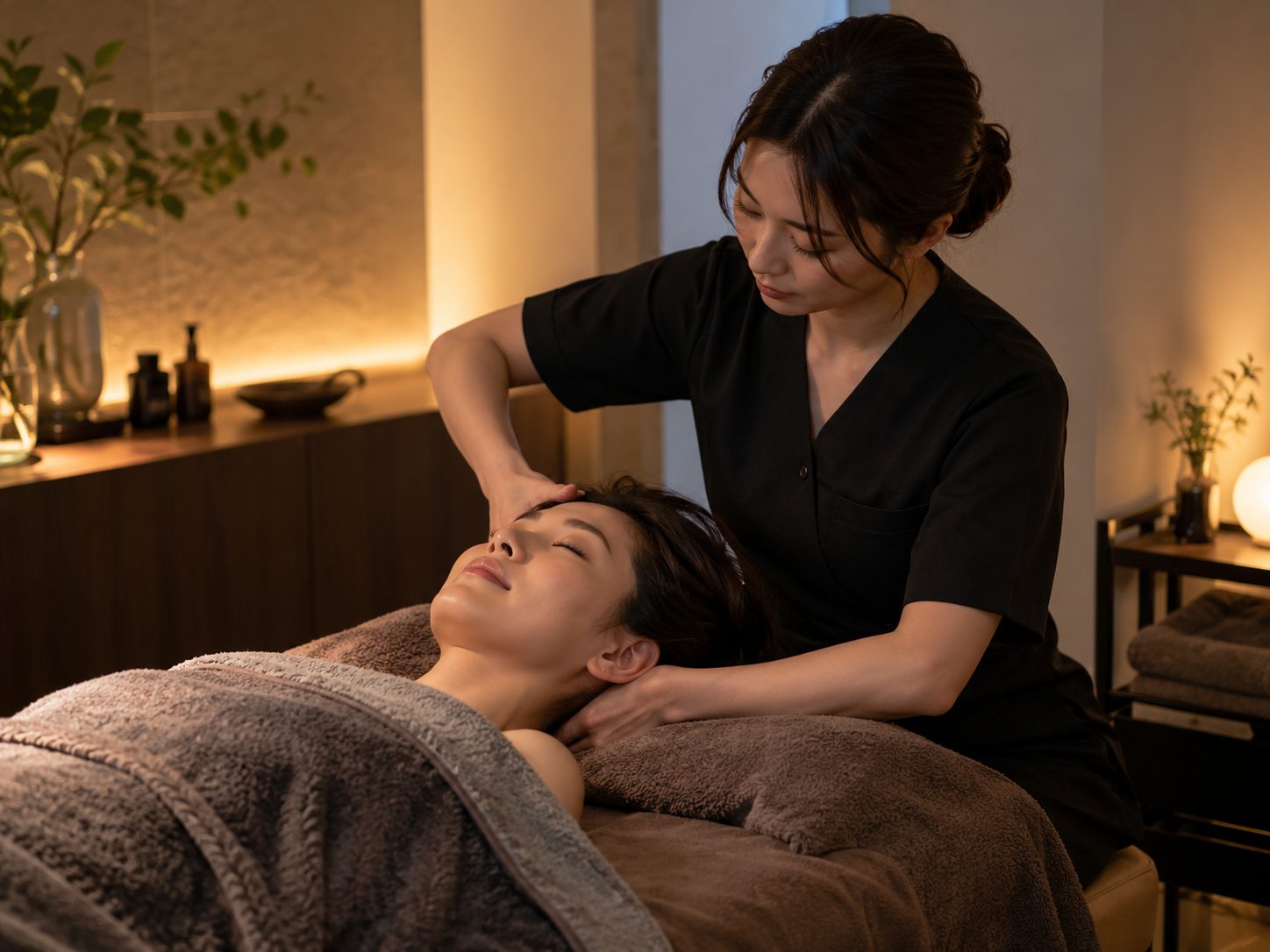
A head spa is a treatment that loosens the scalp and the muscles around the head to leave you feeling refreshed. It used to be seen as something you got as an extra with a shampoo at the hair salon, but more and more specialist shops are now opening, and people with stiff necks and shoulders, tired eyes or shallow sleep go to them specifically for that.
Your head has muscles that tense up without you noticing as you use computers and smartphones, such as the temporalis at the temples and the muscles running from the forehead to the back of the head. Loosening them can be expected to ease heaviness in the head and tiredness behind the eyes.
Three main types
| Type | What it involves | Best for |
|---|---|---|
| Dry | Fully clothed, without oil or water, the therapist loosens your head and neck with their fingers | People who want a treatment during the workday without messing up their hair |
| Wet | At a shampoo station, the scalp is washed and loosened using warm water and oil | People who want to refresh an oily or odorous scalp |
| Cream | The scalp is wrapped in moisturizing cream as it is loosened | People concerned about a dry scalp, or who want to relax more deeply |
Wet and cream treatments need time afterward to dry your hair. A dry treatment is less likely to disturb your hairstyle, so it's easy to fit in before work or between meetings. Some shops also provide a shampoo station and hair dryers you can use after a dry treatment.
How to choose a shop
1. Decide what you want to relieve
Pick the one thing that bothers you most, whether it's tired eyes, a stiff neck and shoulders, shallow sleep or the condition of your scalp, and choosing a shop and a course becomes easier. Mention it when you book or during counseling, and they can suggest a treatment to match.
2. Just the head, or the neck and shoulders too?
Some courses loosen only the head, while others also work on the neck, shoulders and arms. If desk work leaves your neck and shoulders very stiff, you're likely to be happier with a course that includes them. In data published by a dry head spa in Nishi-Shinjuku, 65% of customers also felt tired in the neck, and 59% in the shoulders.
3. Private rooms and convenience
If you want to rest without worrying about the people around you, a shop with fully private rooms is a good choice. Also check how far it is from your workplace or home, and whether its hours let you drop in after work, so you can keep going without strain.
4. Making sense of prices
Prices vary with the length of the treatment and what it uses, such as creams and aromas. Many shops offer a first-visit discount, so a safe approach is to try a course of around 60 minutes first and, if it suits you, move on to a longer or more elaborate course.
From booking to the day itself
- Book: Reserve through the shop's website, a booking site or by phone. Popular time slots fill up quickly, so booking early is the safest bet.
- Arrive: Aim to arrive about 5 minutes before your booking. Shops with private rooms often control how many people are inside.
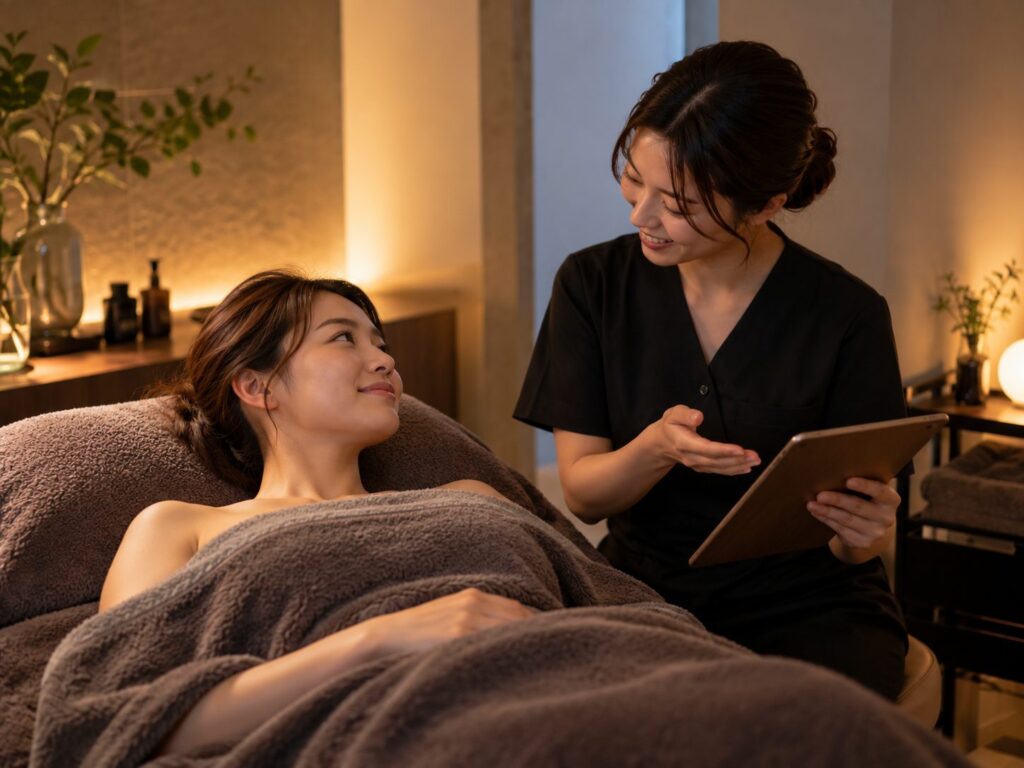
- Counseling: Fill out a questionnaire about the areas that bother you, how you're feeling and how much pressure you like.
- Treatment: You lie down for the treatment. It's fine if you fall asleep.
- Getting ready and aftercare advice: Tidy your hair and appearance, and get tips for care at home.
Counseling and getting ready take time, so if you allow about 15 minutes on top of the treatment time, you won't have to rush to your next appointment.
Tips for the day
- Makeup: Most shops let you keep it on. Courses that also work on the face may smudge it.
- Styling products: You can still have a treatment with them in, but if possible go without, so your hair is less likely to snag.
- Pressure: If it hurts, say so. Stronger doesn't mean more effective.
- Conversation: Let them know whether you'd like to rest quietly or chat during the treatment, so neither of you has to second-guess the other.
- Cancellations: Same-day cancellation fees vary from shop to shop. Check when you book.
Common questions
Is it OK to fall asleep during the treatment?
That's no problem at all. In fact, many people do. At the Nishi-Shinjuku shop mentioned earlier, 92% of its 454 customers reportedly fell asleep during their treatment.
How often should I go?
There's no set rule. If you tend to build up fatigue, try going about once every 2 to 4 weeks at first, then settle on an interval as you see how your body responds. Some shops offer a discount if you return within a month of your last visit.
What if I'm worried about my health?
If you're pregnant or have a chronic condition, be sure to mention it when you book or during counseling. For pregnant customers, many shops seem to require a doctor's permission and that the pregnancy has reached the stable phase. If you have a fever, or a cut or inflammation on your scalp, don't push yourself. Come back another day.
Summary
- There are three basic types of head spa: dry, wet and cream.
- Decide what you most want to relieve, then choose a course based on whether it should include the neck and shoulders.
- Allow the treatment time plus about 15 minutes.
- Don't hesitate to say how much pressure you like and whether you want to talk.
For a dry head spa with fully private rooms in Nishi-Shinjuku, see our article on La HEAD, which covers its courses and prices along with usage data from its first six months.