There's a reason pain comes back after a massage
Right after a massage, you feel better. But a few days later, the same heaviness in your lower back and the same stiffness in your neck and shoulders are back. You get by with pain-relief patches and painkillers, yet by the end of the workday your body feels heavy again. Does that cycle sound familiar?
Nishi-Shinjuku 7-chome Seikotsuin is an osteopathic clinic that takes on the question of why the pain keeps coming back. In the office district of Nishi-Shinjuku, it mainly treats people who work at desks. It places particular emphasis on lower back pain, and all of its staff hold national qualifications, such as that of judo therapist (judo seifukushi, a licensed Japanese practitioner who treats injuries to bones, joints and muscles).
Looking at the cause, not just where it hurts
What this clinic values most is finding the real cause that lies behind the pain, which it sees as a "result." Behind lower back pain or stiff shoulders, there's almost always an everyday posture or a habit in the way you use your body. Even if chasing only the surface brings relief, the pain will come back as long as the cause remains.
What we value first and foremost is finding the real cause that lies behind the "result," which is the symptom.
(Tatsuya Onaga, director of the clinic, from the greeting on the official website, translated from Japanese)
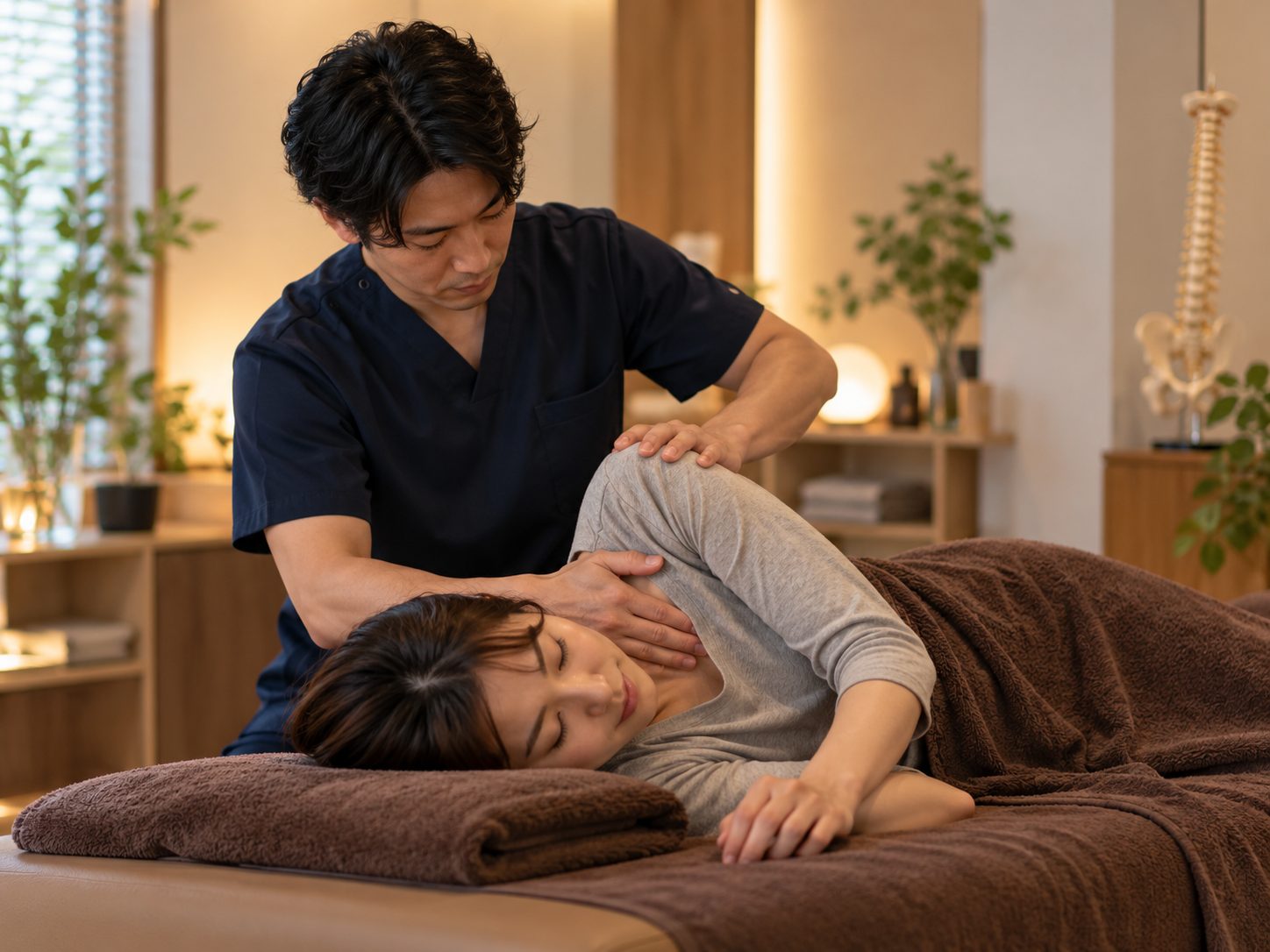
So during treatment, staff first check which tissue is actually producing the pain, then work out why that area is under strain by looking at how you use your body and at any misalignment in your skeleton. Treatment then centers on manual therapy, such as loosening muscles, improving the movement of the fascia and restoring movement to joints that have stiffened, combined with electrotherapy, ultrasound therapy and other methods as needed.
What sets Nishi-Shinjuku 7-chome Seikotsuin apart
- 30 minutes of manual therapy: Manual therapy that ends after about 20 minutes at many clinics is deliberately given 30 minutes here, to find the cause by looking at how the whole body is connected.
- A focus on lower back pain: Many patients come in about chronic lower back pain, sciatica or sudden acute lower back pain (known in Japan as gikkuri-goshi).
- Every staff member is nationally licensed: You're treated by staff who hold national medical qualifications approved by the Ministry of Health, Labour and Welfare.
- Open into the evening: On weekdays, the clinic accepts patients until 20:30, so you can stop by after work.
- Private rooms available: Self-pay treatments (those not covered by health insurance) can be given in a private room.
How treatment works
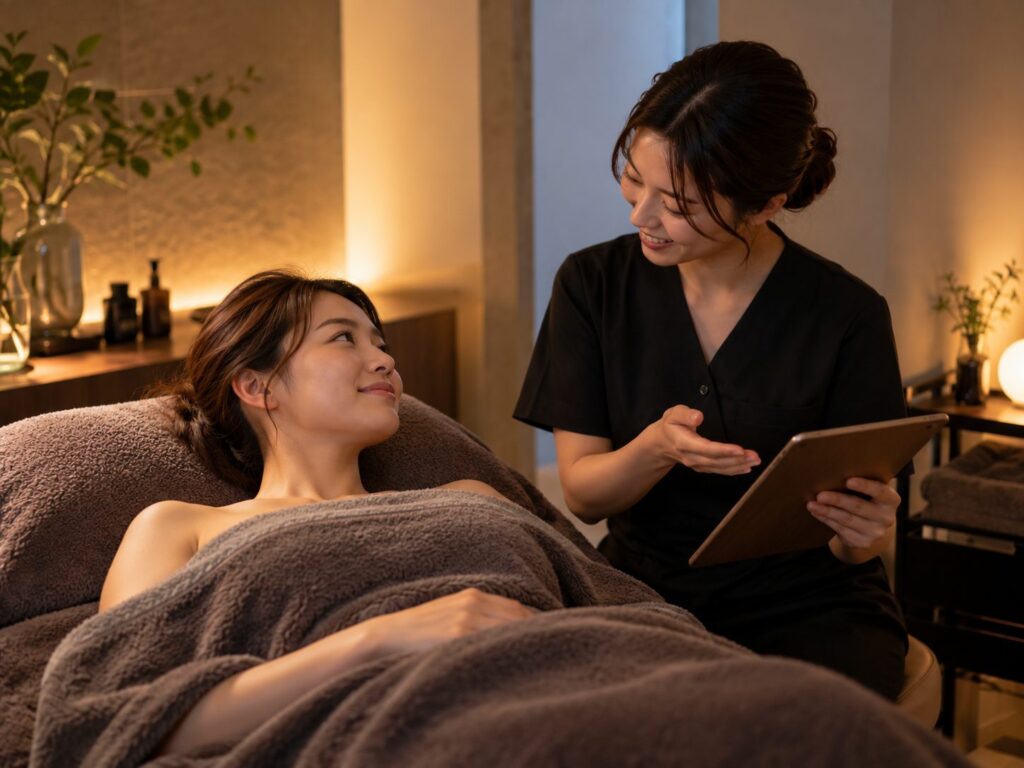
On your first visit, the staff take their time over a consultation and examination.
- Consultation and questions: Staff ask in detail when the pain started, when it hurts, your posture at work and so on.
- Posture and movement assessment: Staff check your standing posture, the way you walk and your joints' range of motion, looking at and feeling for any tilt in your pelvis or misalignment of your spine.
- Explanation of the treatment plan: Based on the results, they explain the cause of your symptoms and the treatment approach in plain terms.
- Treatment: Bodywork and skeletal adjustment that work on the muscles, skeleton and posture.
- Self-care advice: Tips on how to look after yourself outside the clinic, such as posture in daily life and stretches.
How long and how often you'll need treatment depends on your symptoms, but according to the clinic, some symptoms clear up after just a few sessions.
Prices
For symptoms with a clear cause, such as an injury, you can also ask about treatment covered by health insurance. The main prices are as follows (self-pay prices include tax).
| Menu | Approx. time | Price |
|---|---|---|
| Insurance + self-pay treatment (first visit) | About 45 to 60 min | ¥3,000 (normally ¥4,500) |
| Full-body treatment (from the second visit) | About 30 min | ¥3,500 |
| Lower back pain course (self-pay, first visit) | About 45 to 60 min | ¥4,400 (normally ¥4,950) |
| Lower back pain course (self-pay, from the second visit) | About 30 min | ¥4,950 |
Treatment of one area covered by insurance costs ¥0 to ¥2,000, depending on factors such as your insurance co-payment rate. If it has been a month or more since your last visit, there's a separate return-visit fee of ¥1,000.
For people who work at desks
Long meetings, hours at the computer, a heavy lower back at the end of the day. Nishi-Shinjuku 7-chome Seikotsuin makes a point of uncovering what's behind your aches, taking into account how people in Nishi-Shinjuku work and the habits their bodies pick up.
Rather than putting up with the pain and carrying on working, take some time to give your body a proper check. Patients with bookings are seen first, and online booking is open 24 hours a day, so stopping by after work for an initial consultation could be a good place to start.
The clinic also has a technical partnership with La HEAD, a nearby dry head spa, and new La HEAD staff are trained here in the structure of the body, including the neck, shoulders and arms.
Shop information
- Name
- Nishi-Shinjuku 7-chome Seikotsuin
- Address
- 7-18-19 Nishi-Shinjuku, Shinjuku-ku, Tokyo 160-0023 (新宿税理士ビル第2別館佐竹1F)
- Nearest station
- 4 min. walk from Shinjuku-nishiguchi Sta. / 5 min. walk from Tochomae Sta.
- Opening hours
- Mon–Fri 11:00–21:00 (last check-in 20:30) / Sat & holidays 10:00–16:00 (last check-in 15:30)
- Closed
- Sundays
- Reservations
- Bookings take priority. Official website (in Japanese), LINE or phone (03-6908-7120)
- Website
- nishishinjuku7.com
Sources
This article was put together by our editors from the following publicly available information (as of October 30, 2026). Prices and reception hours may change, so please check the official website for the latest information.
- Nishi-Shinjuku 7-chome Seikotsuin official website (the clinic's features, how treatment works, prices, greeting from the director, FAQ)
- Karada Works press release, "New treatment developed through a technical partnership with an osteopathic clinic available from August 1" (August 4, 2026)