This is a sample article created to check how the site looks. The restaurant's name and details are placeholders and are not based on actual reporting. The explanations of yakitori, binchotan charcoal and business-dinner etiquette are general information.
At a counter with just eight seats
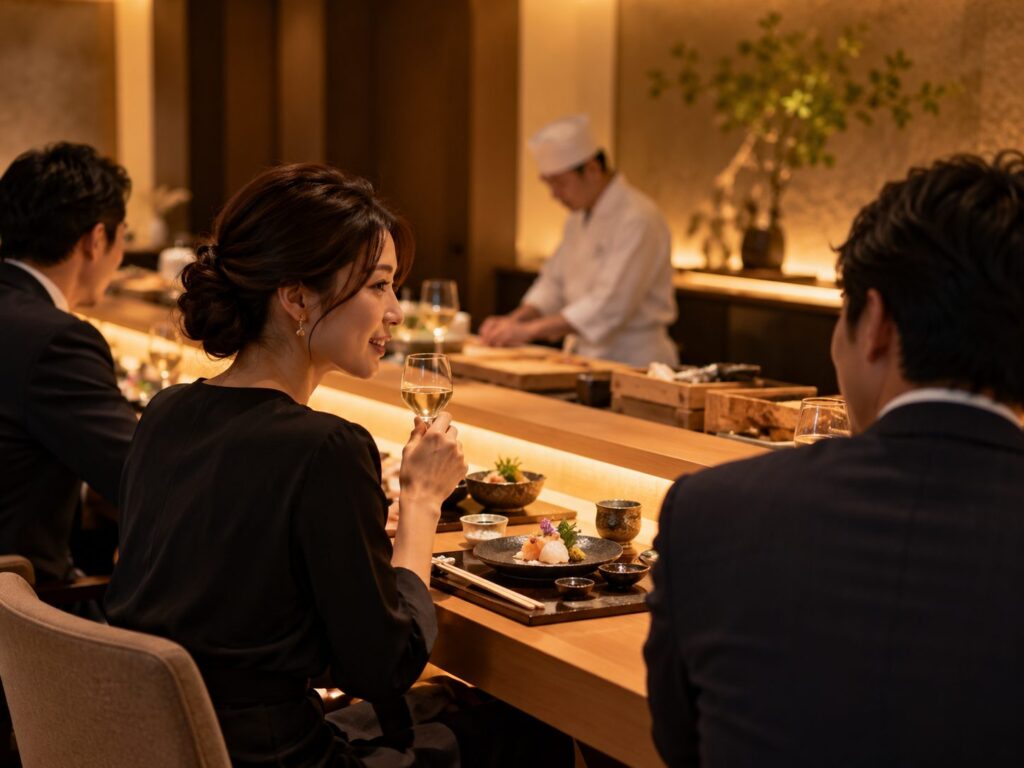
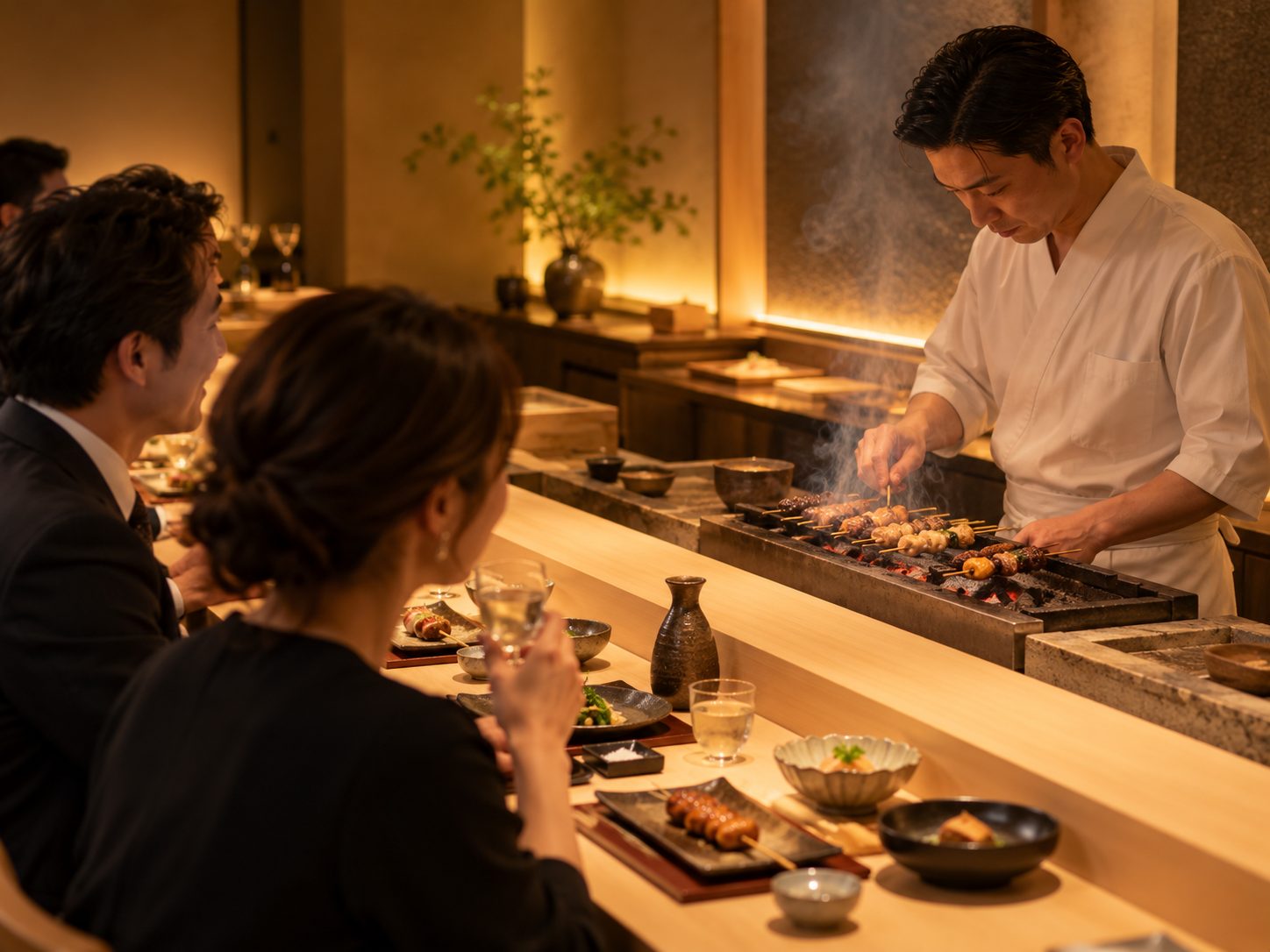
Step off the main streets of Toranomon's office district into a side alley, and you'll find a yakitori restaurant with a noren curtain hanging at its entrance. The counter, made of pale, unfinished wood, seats just eight. At the grill right in front of you, the owner checks the charcoal and turns the skewers one at a time.
The seats are kept to a handful so that each skewer can be served at the exact moment it tastes best. With so little distance between the cook and the guests, you can listen to talk about grilling and the different cuts of chicken as you eat, which is one of the pleasures of this place.
Why binchotan
Binchotan, a word you often hear at yakitori restaurants, is a type of white charcoal made by firing hard woods such as ubame oak at high temperatures. It takes a while to light, but once it catches it holds a high temperature for a long time and gives off little smoke or odor.
Searing the surface quickly over a strong fire leaves the skin toasty and fragrant while the inside stays moist, with the juices sealed in. Even with the same cut, the result changes depending on where the charcoal sits and when the skewer is turned, so the griller's skill shows directly in the flavor.
How the omakase course unfolds
The course usually begins with a small seasonal dish, moves on to 7 to 8 skewers of yakitori, and finishes with a rice or noodle dish and soup.
| Order | What's served |
|---|---|
| To start | A small seasonal dish, chicken sashimi or appetizers |
| Yakitori | 7 to 8 skewers, such as sasami (tenderloin), seseri (neck), negima (chicken and leek), tsukune (meatball), hatsu (heart) and bonjiri (tail) |
| Palate cleanser | Grilled vegetables, grated daikon radish and the like |
| To finish | A rice or noodle dish such as oyakodon (chicken and egg rice bowl) or chicken soba, with chicken soup |
Each cut is served the way it's best enjoyed, with salt, tare (a sweet soy-based sauce), wasabi and so on, so you can simply taste and compare without having to decide. If there's a cut you don't care for, it can often be swapped for something else, so don't hesitate to say so.
How to enjoy each cut
- Seseri: The neck. It's a hard-working muscle, so it's springy and full of rich, fatty flavor.
- Bonjiri: The base of the tail. It's high in fat, and grilling it with salt brings out its toasty aroma.
- Hatsu: The heart. Mild in flavor, with a pleasantly firm, slightly crunchy bite.
- Tsukune: The skewer where each restaurant's personality tends to show. Many places serve it with an egg yolk on the side.
Tips for business dinners
At a counter you sit side by side, so you naturally feel closer to your companions than at a table where you sit facing each other. The food gives you plenty to talk about, which makes it a good choice even for dinners with people you're meeting for the first time.
- 2 to 4 people is a good guideline. With more, it becomes hard to talk from one end of the counter to the other.
- As a rule of thumb, the seat of honor is the one farthest from the entrance. Offering your guest the seat directly in front of the grill is also appreciated.
- Let the restaurant know about any foods your party doesn't eat and their drink preferences when you book.
- Seats are limited, so book early once the date is set.
For working people
At the end of the day, waiting for a skewer to finish grilling right in front of you makes a small break that helps you switch off from work. Whether for a business dinner or an evening on your own, yakitori at the counter could well become something for people working in Toranomon to look forward to before a day off.